“High-probability” is one of the most misused phrases in trading. And due to this misuse, it has a dangerous power to make you relaxed when your senses should be active.
The assumption with “high-probability” signals is that the setup is safer, smarter, or somehow more likely to pay off more because of the label. But that is not what high probability actually means. A high-probability setup can still fail, and a low-probability setup can often work.
The real problem is not probability itself, but how we respond to it.
Some stop respecting risk because the setup “looks strong.” Others treat a statistically favorable trade like a guaranteed outcome. And many forget that probability only makes sense inside a very specific framework: the right market context, the right entry, the right invalidation, and the right timing. Remove those, and the edge starts falling apart.
In this article, I want to break down what traders usually get wrong about high-probability signals, why those mistakes happen, and what a more realistic way of reading them actually looks like.
1. What “High Probability” Actually Means in Trading?
In trading, “high probability” does not mean guaranteed. It simply means that a setup has shown better-than-average odds under a specific set of conditions.
That last part is where most of us mess it up.
Probability does not exist in a vacuum. A setup is not high probability just because someone calls it that. It becomes high probability because the structure, market context, entry quality, timeframe, and invalidation all line up in a way that has historically produced a stronger outcome. Change those conditions, and the probability can change with them.
Let’s take a simple breakout for an example.
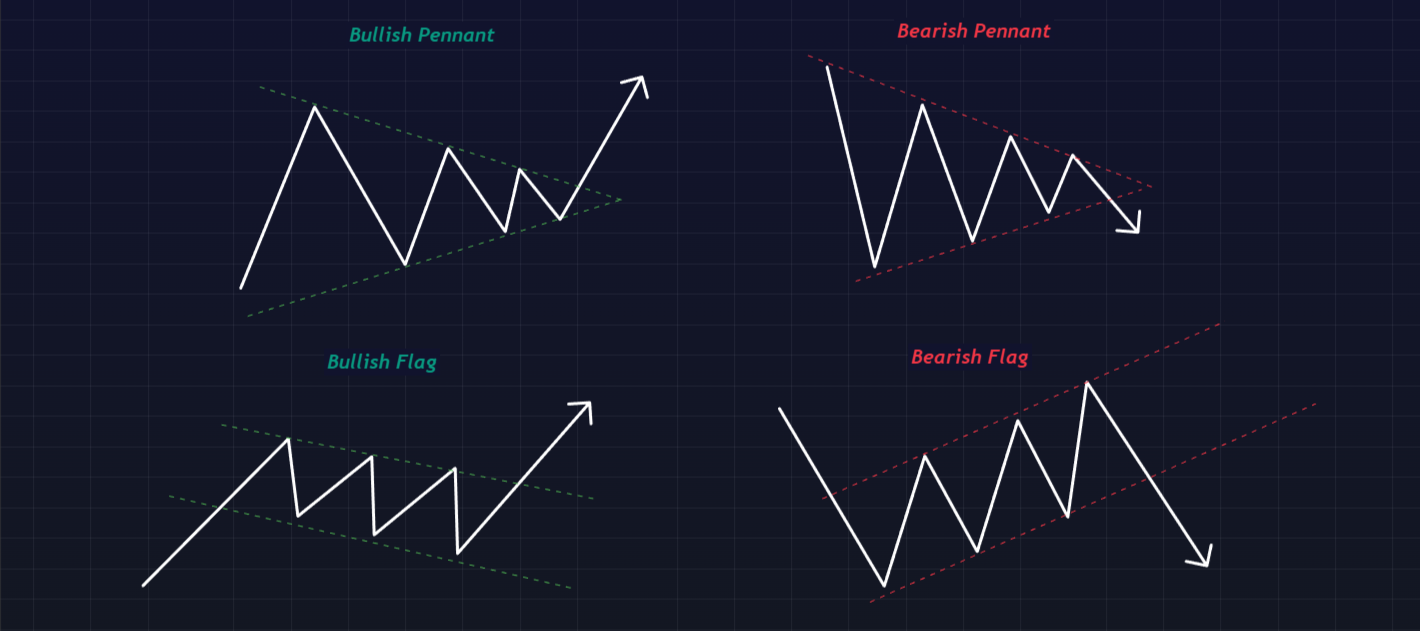
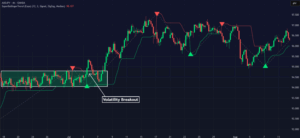
A breakout above resistance during a liquid session, with strong momentum and a clear invalidation level, may have much better odds than a random breakout in dead market hours with weak follow-through. On the surface, both are “breakouts.” In practice, they are not the same trade at all. One has context, and the other is merely a shape on a chart.
That is why I always say high probability should be read as better odds, not better promises.
It is also worth remembering that probability alone is not enough. A setup may have favorable odds, but if the entry is poor, the stop is unclear, or the trader is entering too late, the practical quality of that trade drops quickly. In other words, the label only means something when the structure around it is still intact.
I’ll show you some of the biggest mistakes that I made in the past and the ones I often see newbie traders make in the Zeiierman community.
2. Biggest Mistakes Traders Make
Mistake #1: Treating High Probability Like Certainty
The moment a setup gets labeled “high probability,” many traders stop reading it as a trade and start reading it as an outcome. In their head, the setup is no longer “a trade with better odds.” It becomes “a trade that should work.” This small shift often leads to dangerous outcomes.
Next time you’re dealing with a ‘high-probability’ signal, notice how your behavior changes. Often, traders become less patient with the stop-loss, more emotionally attached to the idea, and far more frustrated when the trade fails.
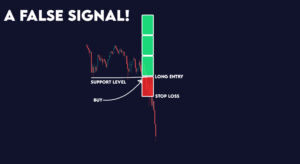
A high-probability setup can still lose cleanly. In fact, if you trade long enough, you will eventually watch a setup with excellent context fail almost immediately. That does not mean the probability label was wrong. It means probability was never a certainty in the first place.
Let’s continue with breakout-themed examples. Say price breaks a major intraday level during London open with strong momentum, a clean close, and high participation. That may absolutely qualify as a strong or high-probability trade. But if sellers step in hard above the level or macro news shifts the market tone, that setup can still fail.
If the setup is strong, take it seriously. Size it properly. Manage it properly. Respect the stop. But do not turn the label into a promise the market never made.
Mistake #2: Ignoring Risk Because the Setup Looks Strong
The second mistake often follows the first one rather quickly. Once traders start relaxing in the wrong places, they become looser with risk because the trade is already a ‘done deal.’
However, in the practical world, a strong setup still needs a stop-loss, position sizing, and an invalidation point as a backup. None of these should disappear just because the chart looks clean. A clean setup without risk discipline is still just a well-dressed mistake in my experience.
Imagine seeing a strong bullish continuation setup in a trending market. Price is above the moving averages, volume is expanding, and the structure looks beautiful. Because everything looks aligned, we decide to take a larger position than usual or to use a stop that makes little sense. At that point, the probability edge is no longer the issue. The problem is that we turned a good setup into bad risk management.
This is why experienced traders do not let the “high-probability” label change the fundamentals. In some ways, the best-looking trades are the most dangerous, because they tempt traders into dropping their discipline. And the market has a very efficient way of punishing that.
Read: Trading Signals vs Vague Alerts: Why Structure Wins for TradersMistake #3: Forgetting That Context Creates Probability
Another mistake I often notice among newbies is ignoring the context around what makes a trade high-probability in the first place. They copy the setup’s shape but ignore the environment that gave it better odds in the first place. So they see a breakout pattern, a pullback entry, or a liquidity sweep reversal and assume the pattern alone is enough. It usually isn’t.
A breakout in the London or New York session is not the same as a breakout in a sleepy, illiquid hour. A trend continuation in a healthy trend is not the same as a continuation attempt inside chop. On the surface, those setups may look similar. In practice, they are completely different trades.
If the edge historically came from a certain environment, then removing that environment changes the edge. That is why context must be taken into account as part of the probability.
This is also one of the biggest reasons newer traders feel like a setup “stopped working.” Often, the setup stopped working; they simply applied it outside the context that made it reliable in the first place.
Mistake #4: Focusing Only on Win Rate
A setup wins 70% of the time. Great. Another wins 45% of the time. That must be worse, right? Well, it’s complicated.
This is one of the most common mistakes traders make with high-probability signals. They reduce the entire quality of a setup to a single number and ignore everything else that actually determines whether the trade is worth taking.
A setup can win often and still be badly traded. A setup can win often and still offer a poor reward relative to the risk being taken. And a setup can have a lower win rate while still being more attractive overall because the structure, invalidation, and trade management are stronger.
This is why experienced traders never look at the win rate in isolation. They also care about risk-to-reward, entry quality, clarity of invalidation, repeatability, and whether the setup can actually be executed cleanly in live conditions.
In short, high probability should never be reduced to just “this wins a lot.”
Mistake #5: Entering Too Late Because the Signal “Still Looks Good”
The fifth and final ‘big mistake’ is brutally common because it feels rational in the moment.
A trader sees a strong setup, watches it start moving, hesitates for a bit, and then tells themselves the signal still looks good. Technically, they may not even be wrong. The setup may still look strong on the chart. But the problem is that late entry changes the trade itself.
The assumption that the probability of the setup transfers automatically to the probability of their late entry is simply misguided. A good signal taken badly is still a bad trade.
Let’s say a breakout signal is high probability because the price is breaking resistance early in the session with strong momentum and a clean invalidation below the breakout base. If the trader enters near the actual breakout point, the trade takes on a specific shape. But if they wait until the price has already extended 1.5% higher because they got caught up watching the move, then the structure is different now. The stop may still need to sit in the same general area, but the upside has shrunk relative to the risk. The signal may still be strong, but the entry isn’t the same.
This is one of the biggest reasons traders feel like a setup “should have worked” but still lose money on it. Often, the setup did work. They just entered it in a worse place than the setup was originally designed for.
3. Where Structured Signals Actually Help
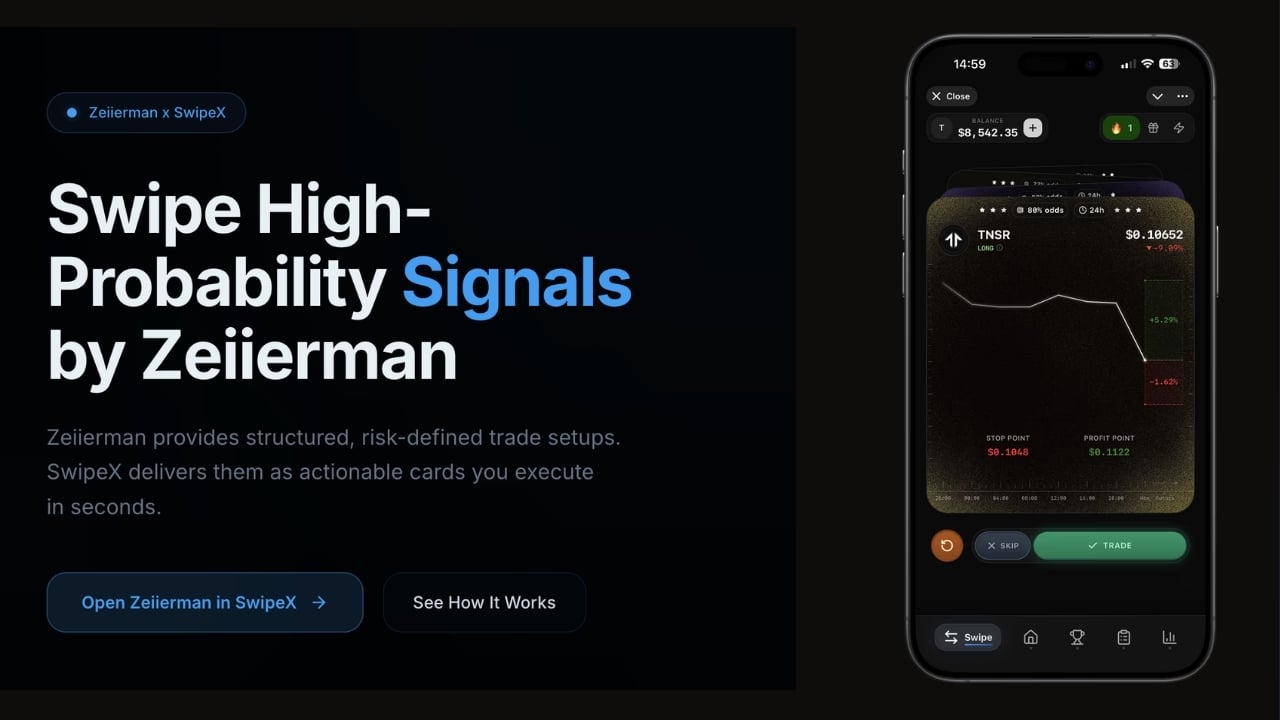
A good, structured signal does not help because it magically removes the risk. It helps because a structured signal is easier to read properly. When a signal comes with a clear entry, defined invalidation, take-profit levels, a timeframe, and validity, the trader has a much better chance of treating the setup as a framework rather than a guess.
Read: How AI Probability Changes the Way Traders Read SignalsA strong-looking trade is where most people are most likely to get careless. They relax too much, size too aggressively, or assume the market owes them follow-through. Structured signals help push back against that by clearly putting the trade plan in front of the trader.
Instead of reacting to a label, the trader is forced to review the actual shape of the trade:
- Where the entry is
- Where the setup fails
- What the targets are
- How long does the idea remain valid
That does not guarantee discipline, but it makes discipline easier.
This is also why I think structured signals are far more useful than vague prompts when probability is involved. A vague alert paired with a “high-probability” label is a dangerous mix, because it invites confidence without providing enough structure. A stronger signal framework does the opposite. It reminds the trader that probability should be read inside a proper trade structure, not in isolation.

Zeiierman
With over 16 years in the market, Zeiierman has extensive experience as a full-time trader and risk advisory consultant for hedge funds. He has developed many profitable trading strategies, drawing on his background in risk management and strategy execution.
More from Zeiierman