Trading alerts are incredibly easy to find.
Open TradingView, join a Discord server, follow a few traders on X, or download almost any trading app, and you will be flooded with them. The real problem, at least the way I look at it, is that most of these aren’t complete enough to be used for trading.
Some merely notify you that an asset hit a level. Others tell you momentum is building or that a breakout may be forming. On paper, that sounds useful. And it is. But only when you’re using them as part of a larger trading strategy.
In reality, however, incomplete alerts often create more work than clarity. You still have to open the chart, figure out whether the setup is still valid, define your own entry, place a stop-loss, decide on targets, and work out whether the move is worth touching at all.
By the time you do that, the market may have already moved. That is where the difference between a vague alert and a proper trading signal starts to matter. To put it simply,
Trading signals differ from vague alerts because they provide structure rather than just notifications. A vague alert tells you something happened, while a proper trading signal tells you what the opportunity is, where to enter, where the trade is invalidated, and how the setup is meant to be managed.
A structured trading signal differs because it already includes the trade’s core framework. And for most traders, that is a bigger advantage than it sounds. Trading is hard enough when your analysis is right. It gets even harder when the signal itself is incomplete.
Here’s a quick comparison table if you want a quick TLDR for the article.
1. Quick Comparison: Vague Alert vs Structured Trading Signal
Here is the easiest way to look at it:
| Feature | Vague Alert | Structured Trading Signal |
|---|---|---|
| Purpose | Lets you know something happened | Gives you a trade setup to evaluate |
| Direction | Often implied or unclear | Clearly defined |
| Entry | Usually missing | Clearly defined |
| Stop-loss / invalidation | Usually missing | Clearly defined |
| Targets | Rarely included | Clearly defined |
| Timeframe | Sometimes unclear | Usually specified |
| Validity window | Rarely stated | Usually part of the structure |
| Trader guesswork | High | Lower |
| Decision speed | Slower, because more has to be figured out | Faster, because the framework is already there |
| Best use case | Awareness or context | Actual trade review and execution planning |
That table does not mean vague alerts have no value. They do. But they serve a different purpose.
A vague alert is useful when you already know what you are looking for and just need a notification. A structured trading signal is more useful when you want the trade’s actual framework laid out clearly enough to review and act on without having to rebuild the entire idea yourself.
2. What a Trading Alert Actually Does
In most cases, a trading alert is a notification rather than a complete trading plan. I’ll use TradingView’s example to explain better.
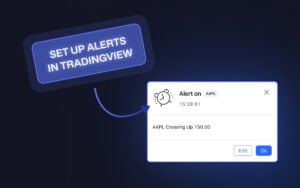
Platforms like TradingView describe alerts as tools that notify traders when certain events occur, such as a price level being hit, an economic release, or a technical condition being met. In other words, alerts are built for awareness first. They are there to tell you that the market did something worth noticing, which is inherently different from “market did something worth trading.”
That distinction matters because alerts are not inherently bad. In fact, they are useful when you already have a broader system in place. If your strategy says, “Watch EUR/USD when it breaks yesterday’s high,” then a clean price or indicator alert can save you from staring at the chart all day. We too have a detailed guide on how to create TradingView alerts if you want to get started:
Read: Setting Up Alerts in TradingView – Pop-up, In-App, Email & MoreThe problem starts when traders confuse that notification with a complete setup. A ping is not the same thing as a trade framework. The best way to think about alerts is this: they tell you something happened, not necessarily what to do next.
3. When Vague Alerts Create Problems for Traders
The issue with vague alerts is not just that they are incomplete. It is that they create room for inconsistent decision-making. When an alert says something like “watch this breakout,” “momentum building,” or “price hit resistance,” the trader still has to fill in all the missing pieces.
- Where is the entry?
- Where is the stop-loss?
- What are the targets?
- How long is the setup still valid?
- Is this a trade idea, or just context for something that might happen later?
That extra interpretation gap is where hesitation and inconsistency start creeping in. This is exactly why more complete signals tend to be more useful in practice. Take Zeiierman’s Trading Signals, for example, which are meant to be acted on as structured trade setups.
Our liquidity signals and OB/OS signals are explicitly described as context signals, not standalone buy/sell instructions. That is a very important distinction: some alerts are for awareness, some are for context, and some are full trade setups. Traders get into trouble when they treat all three equally.
So the deeper problem with vague alerts is not that they are fast. It is that they force the trader to improvise too much after the alert arrives. And in trading, the more improvisation you introduce, the harder it becomes to stay consistent.
4. What a Proper Trading Signal Gives You
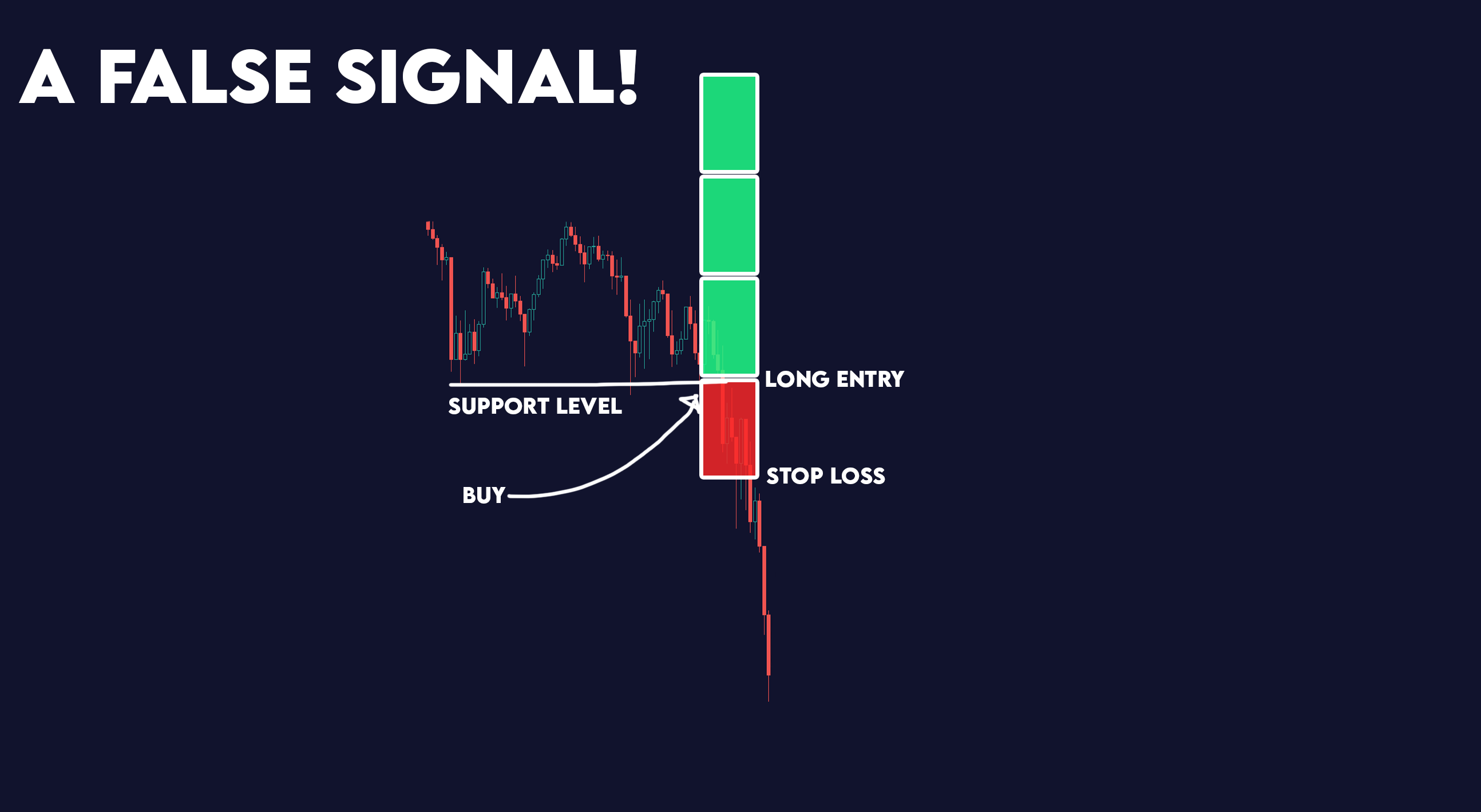
At a minimum, a real signal should tell you four things clearly: direction, entry, invalidation, and targets. In broader industry terms, trading signals are typically described as more comprehensive trade recommendations that include the entry price, stop-loss, and take-profit levels. That is also how we made our Zeiierman Trading Signals: they are meant to be acted on as structured setups and include Entry, TP1/TP2, and SL.
Read: Trading Signals vs Vague Alerts: Why Structure Wins for TradersThat structure matters because each field answers a different trading question:
- Direction tells you what side of the market the setup is on.
- Entry tells you where the trade is meant to begin.
- Stop-loss / invalidation tells you where the idea is wrong.
- Targets tell you where the setup is expected to pay.
Without those pieces, you are not really looking at a signal. You are looking at market information that still needs to be turned into a trade. Let’s compare with an example.
A vague alert might say: “Gold breakout incoming.”
In comparison, here’s what a structured signal would look like: Gold long above X level, stop below Y, TP1 at A, TP2 at B, valid on the 15-minute chart while momentum holds.
The trade already has a shape even before you started your evaluation. A good signal reduces the number of decisions you need to make under pressure, without taking the final judgment call away from you. At the same time, it stops you from having to build the whole trade on the fly after the market has already moved.
And if you want to go one layer deeper, the best signals also include timeframe and validity. That way, you know whether the setup applies to the next 15 minutes, the current session, or the next day. Because a signal without timing can age very quickly, and a stale signal is one of the easiest ways to force a bad trade.
5. Not Every Alert Should Be a Signal
As an inexperienced trader, I spent decades running towards graphs, charts, and structure. But with experience, you learn that every component has its place in the larger trading framework.
Not every alert is supposed to be a trade command. Some alerts should get your attention. Some must add context. And some are complete enough to be treated as actual trade setups. Problems usually start when we unknowingly (or knowingly) blur all three together.
For example, a simple price alert that says EUR/USD hit yesterday’s high is useful. It tells you something happened. But by itself, it is still just awareness. The same goes for context-style alerts like ‘liquidity sweep detected’ or ‘overbought condition building’. Those may be helpful, but they are not always invitations to jump into a trade blindly.
That is why I think this distinction matters so much:
- Awareness alerts tell you the market did something worth noticing.
- Context signals help you understand the market environment.
- Structured trading signals give you a setup that is actually meant to be reviewed as a trade.
Once you understand that, a lot of confusion disappears.
You stop expecting a raw alert to do the job of a full signal. You stop treating every ping like an entry trigger. And you get much better at knowing when you are supposed to observe, when you are supposed to prepare, and when you are actually looking at something actionable.
6. We Made Structured Signals Even More Actionable
The real takeaway from this article is simple: most traders tend to do better when the signal itself is structured.
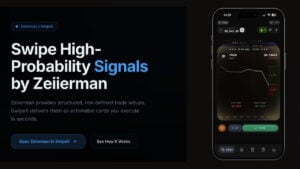
That is exactly why we partnered with a platform like SwipeX. Instead of forcing traders to piece together a trade from a vague alert, the workflow is built around structured signal cards that are easier to review, compare, and act on quickly.
We partnered with SwipeX so they could receive data from our Trading Signals setup, which took us a decade to build. In turn, they turn that data into actionable setups for traders with the addition of a thoroughly backtested AI probability layer. The SwipeX user interface presents trade setups as cards you can swipe to accept or reject as part of your larger trading plan, hence the name: Tinder for Trading.
So yes, alerts have their place. But if you want a cleaner decision-making process, structured signals win. And if you want to see what that looks like in practice, SwipeX is one example of how that structure can be delivered in a way that feels fast, modern, and actually useful.

SM_Trader
SM_Trader is a highly experienced coder and strategy developer who brings the most complex algorithms to life. As a member of MENSA, the prestigious organization for individuals with intelligence scores in the top 2% of the world, he combines exceptional analytical skills with a keen eye for numbers and statistics, empowering businesses to grow at the right pace and in the right direction.
More from SM_Trader