If you are new to SwipeX, the first thing to understand is this: a structured signal is only useful if you know how to read it properly.
Many traders see a signal, assess the direction, and immediately jump to the part where they want to execute. That is usually where things start going wrong. A good signal is not just about whether the trade is long or short. It is also about the entry, the stop-loss, the targets, the timeframe, how long the setup stays valid, and whether it still makes sense by the time you are looking at it.
SwipeX x Zeiierman is built to make trade setups easier to review and act on, but easier does not mean mindless. You still have to understand what the card is showing you and how to make a good decision from it. So in this piece, I want to keep things simple and walk you through how to read a SwipeX signal card, decide whether to swipe or skip, and use structured signals like a trader rather than someone chasing buttons.
How to Read a SwipeX Signal Card Like a Pro
Start with the most obvious part: direction. The card tells you whether the setup is long or short, and that is meant to remove ambiguity from the signal itself.
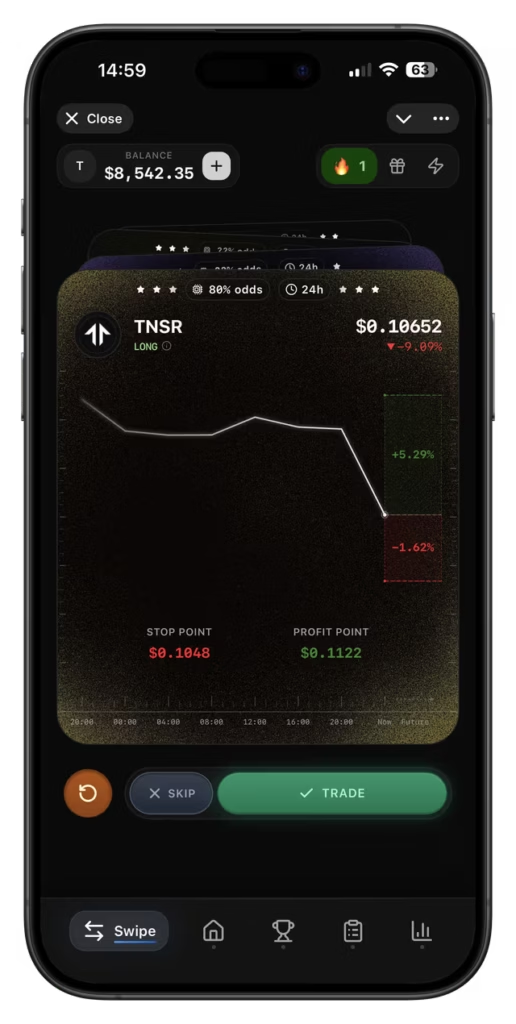
Next is the entry price. This is where the trade is intended to begin, not where you improvise because the price has already moved a little. SwipeX entry levels are calculated from confirmed strategy logic, which is important because it means the signal is not just saying “something is moving.” It defines where the setup is meant to be engaged.
PS. This is truly the best part of SwipeX for those who are already familiar with our trading signals. Because Zeiierman Trading is generating signals for SwipeX to give a UI and analysis boost to our community. That way, you don’t have to worry about the accuracy of SwipeX since we’re doing that heavy lifting ourselves.
Next comes the stop-loss, where many newer traders expose themselves. A stop is not a suggestion. It is the point where the idea is considered wrong. A SwipeX card has a preset stop-loss, and that risk is defined before the trade is executed. That should immediately tell you that this isn’t meant to be traded like a loose opinion. It is meant to be traded like a plan.
After that, look at the take-profit targets. These are not there just to make the signal look more complete. They help frame the trade’s expected path and risk-to-reward structure.
Finally, you have a timeframe and validity. This part matters more than many traders realize. The setup is not meant to live forever. A card that looked attractive an hour ago may no longer be valid now, depending on the market and the signal’s time window.
Additionally, there’s the AI context layer: time-to-hit, expiry, and probability. SwipeX says targets, time-to-hit, and expiry are precomputed for each signal, and the preview also shows stop/invalidation probability. Read that as context, not prophecy. It is there to help you judge pace, expected trade development, and how the setup is framed statistically. It is not there to convince you that a trade is guaranteed.
So if I were reading a card like a pro, my mental order would be:
- What side is this on — long or short?
- Where is the entry?
- Where am I wrong?
- What are the targets?
- Is this still within its valid timeframe?
- What does the time-to-hit / expiry / probability context tell me about how this trade is expected to behave?
That is the difference between looking at a signal and actually reading it properly.
Read: Why Entry, Stop, Targets, Time-to-Hit, and Expiry Matter More Than “Buy Now” AlertsHow to Decide Whether to Swipe or Skip
A structured signal can speed decision-making, but it should never make it mindless. The SwipeX site itself is very clear on this: you can swipe to execute or skip if it doesn’t fit your plan, and you stay in full control. That means the card is helping you make a better decision, not making the decision for you.
So how do you decide?
The first question is simple: Does this setup still fit my risk right now?
Even if the signal is clean, that does not automatically mean it fits your account, your open exposure, or your day. A good setup can still be the wrong trade for you if your risk is already stretched.
The second question is: Is the setup still valid, or am I late?
This is where timeframe, time-to-hit, and expiry become practical. If the price has already moved too far from the intended entry, or if the signal is nearing expiry, then swiping just because the card looks attractive is not disciplined trading. It is chasing.
The third question is: Do the entry, stop, and targets still make sense together?
A signal can be structured yet unappealing if the trade has already drifted from its original shape. If the reward no longer matches the risk, or if the invalidation is no longer clean, that is a skip.
The fourth question is: Does this fit my plan, or am I being impulsive?
This one is personal, but it matters. A lot of bad trades happen not because the signal was bad, but because the trader wanted action. A structured signal card helps reduce noise, but it cannot stop someone from swiping for the wrong reason.
A Simple Beginner Workflow for Using SwipeX Signals
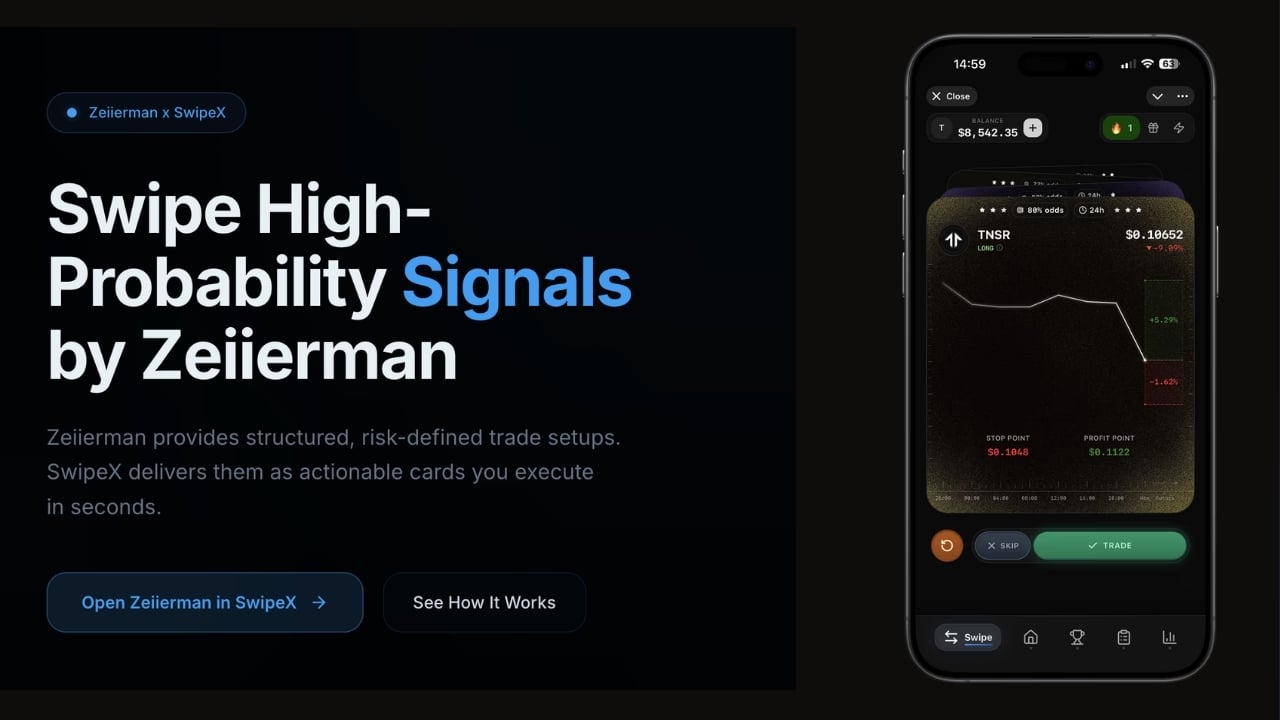
The platform is already built around a simple flow: the Zeiierman strategy generates the setup, the signal appears inside SwipeX as a structured card, and you either swipe to execute or skip it if it does not fit your plan.
The card itself is meant to give you the key pieces up front: direction, entry, stop-loss, targets, timeframe/validity, plus time-to-hit, expiry, and probability context.
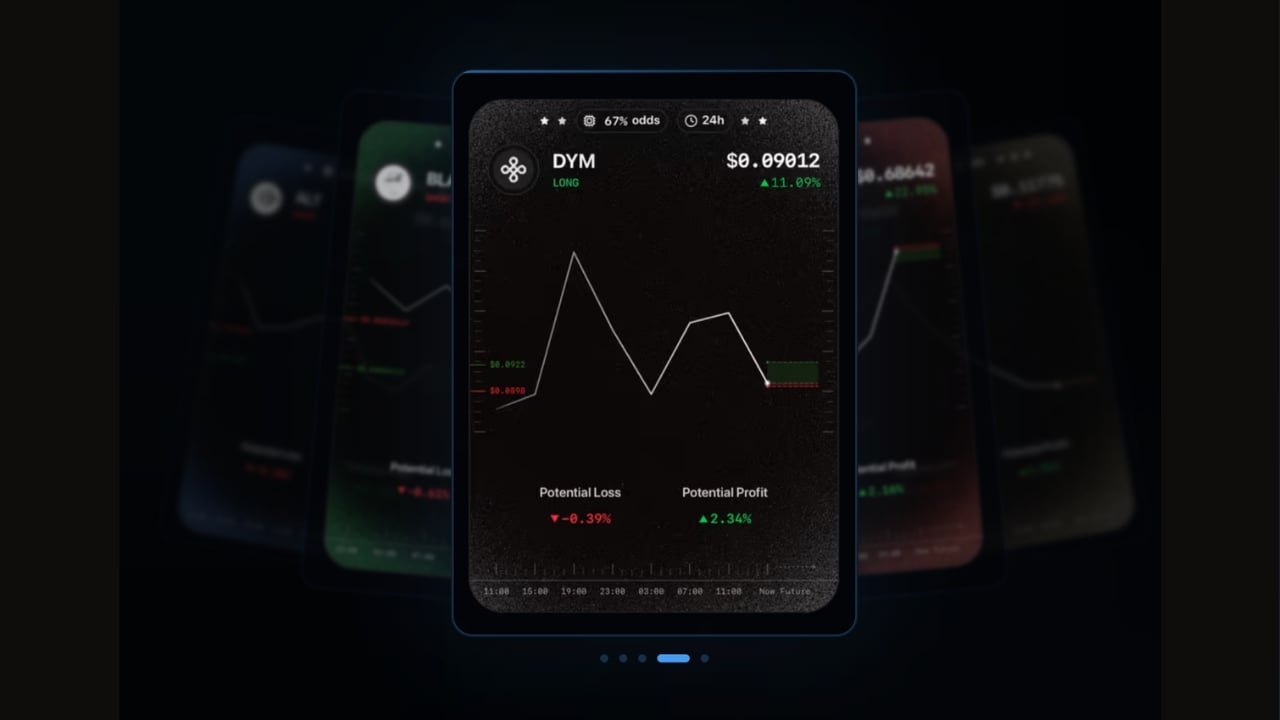
Here is the cleanest workflow I’d suggest:
Step 1: Open the signal card and read the setup, not just the direction. SwipeX explicitly positions these as complete, risk-defined trade setups, meaning the value lies in the entire framework, not just the trade direction.
Step 2: Check whether the trade is still valid. Each signal has a defined validation window, and the AI layer includes expected time-to-hit plus expiry.
Step 3: Understand the risk before you think about the reward. Do not jump straight to the targets.
Step 4: Use the AI probability layer as added context instead of confirmation. The probability provided by GenAI should, at most, help you frame the opportunity.
Step 5: Decide whether the signal fits your plan. If the setup no longer fits your risk, your open exposure, or your discipline for the day, skipping it is still good trading.
Step 6: Swipe or skip. Then move on cleanly. What you do not want to do is sit there half-committing, second-guessing, or forcing a trade because the card looks attractive.
Step 7: Log the trade afterward. If you take the signal, log why you took it, whether you followed the plan, and how it played out. If you skipped it, log why. That is how you turn structured signals into actual learning rather than just fast reactions.
At the end of the day, that is what structured signals are supposed to do: make trading decisions cleaner.
SwipeX x Zeiierman is not built to turn traders into button-pushers. It is built to give you a better framework to work with. You still have to manage your risk, stay disciplined, and decide whether a setup fits your plan. But instead of starting with a vague alert and filling in the blanks yourself, you are working with a signal that already has structure.
And for most traders, that is a big upgrade.
Read: How to Get Started with Automated Trading: From Idea to Live Bot in 3 Simple StepsSo if you are new to SwipeX, keep it simple. Read the card properly. Respect the stop. Check the timeframe and expiry. Swipe when the setup still makes sense, and skip it when it does not.

SM_Trader
SM_Trader is a highly experienced coder and strategy developer who brings the most complex algorithms to life. As a member of MENSA, the prestigious organization for individuals with intelligence scores in the top 2% of the world, he combines exceptional analytical skills with a keen eye for numbers and statistics, empowering businesses to grow at the right pace and in the right direction.
More from SM_Trader