In lay terms, trading signals are essentially trade ideas generated from a defined analysis process. Depending on the service, that process could involve a trader reading the chart manually, an indicator detecting certain conditions, an algorithm scanning dozens of markets, or a combination of all three.
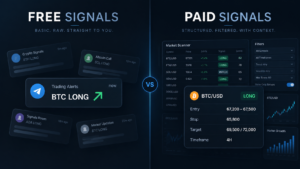
What you receive as an end user can also vary just as much. One provider might send nothing more than “BTC Long,” while another gives you an entry zone, stop-loss, targets, timeframe, and the conditions that would invalidate the setup. Both may call that a trading signal, but they are obviously not giving you the same amount of information.
That difference matters because signals are often discussed as though they were a specific product. In reality, the signal is simply the output. What matters is the process that generated it, the information it includes, and what you do with that information afterward.
1. What is a Trading Signal?
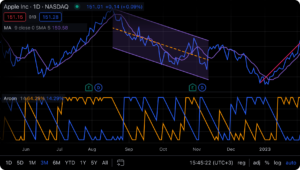
A trading signal is just an indication that a potential trading opportunity has appeared based on a particular set of market conditions or analysis. It could be as simple as a moving-average crossover triggering a bullish alert, or as complex as a system that combines trend, momentum, volatility, liquidity, and several timeframes before deciding a setup is worth sending.
Signals can also come from human analysis. A trader might identify a breakout, pullback, liquidity sweep, support reaction, or another setup manually and then publish the trade idea for others to review. The underlying method can therefore vary considerably, but the purpose is generally the same: reduce a large amount of market information into a potential action or setup that deserves attention.
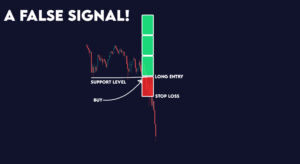
However, it is important to separate a signal from a prediction. A signal does not mean the market will move in the proposed direction. It means a certain condition has been identified and, according to the methodology behind the signal, that condition may represent a trading opportunity. That distinction is important because even a well-designed signal will produce losing trades.
2. What Information Does a Good Trading Signal Include?
A trading signal’s usefulness depends heavily on how much information it includes. A message that says “Buy BTC” gives you a direction, but it leaves almost everything else undefined. You still need to decide when to enter, how much risk to take, where the setup is invalid, and what the trade is actually trying to achieve.
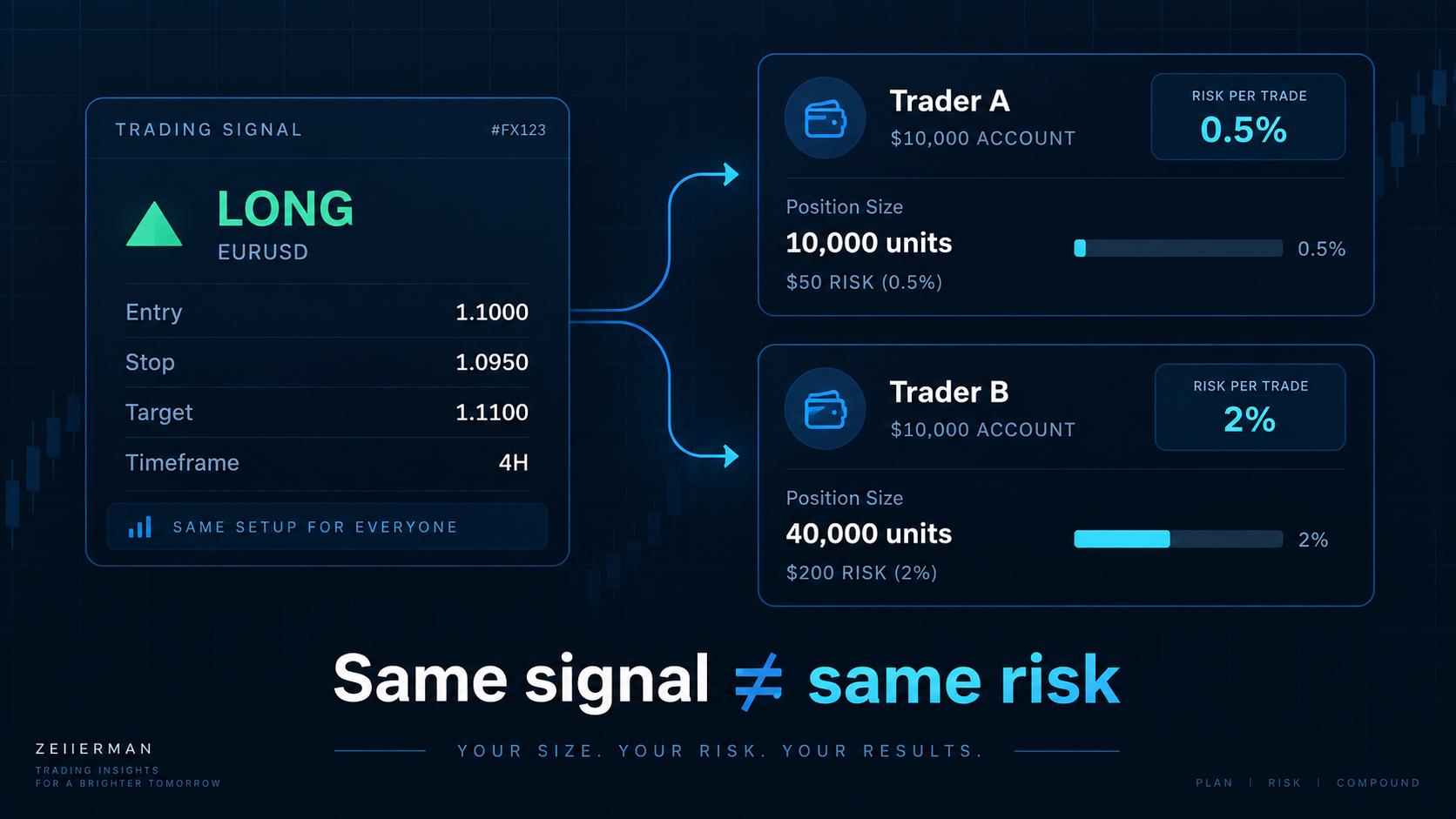
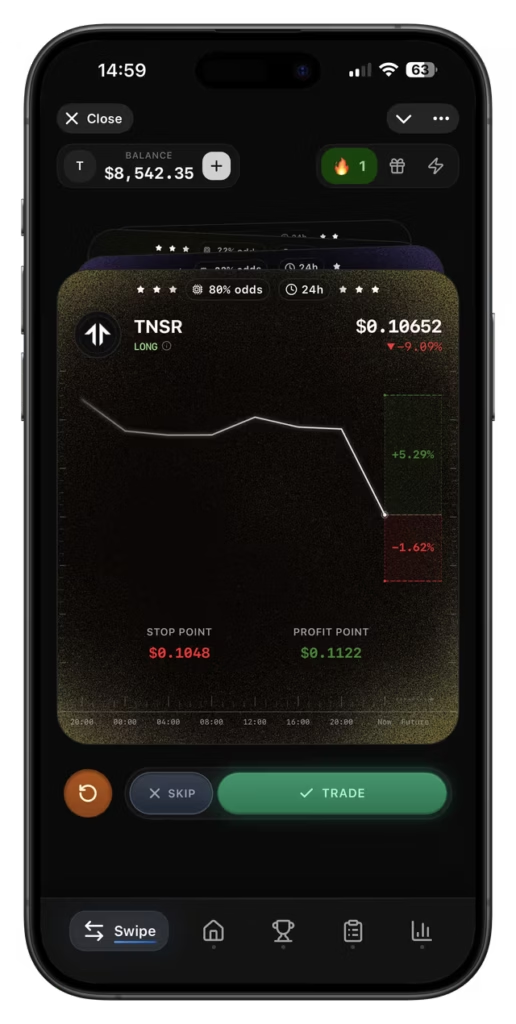
A more complete signal usually includes the market, direction, entry or entry zone, stop-loss, profit target, and timeframe. Depending on the strategy, a signal may also include an expiry, invalidation condition, setup type, or a short explanation of the market context.
For example, a breakout signal may only remain valid while price holds above a particular level. If that level fails before entry, the original idea may no longer apply even though the alert itself is still sitting in your inbox. The timeframe is crucial because the same market can produce completely different signals at the same time. Bitcoin could be bullish on a four-hour chart while a five-minute strategy is signaling a short-term short.
Read: How to Evaluate a Trading Signal Provider Before You Subscribe3. How Do Trading Signals Work?
Most trading signals follow the same basic sequence, even if the technology behind them is completely different: Market data → Analysis or rules → Setup detected → Signal generated → Alert delivered → Trader evaluates it.
Once the market data is in place, the signal methodology looks for a specific condition. A breakout system might wait for price to move through resistance. A momentum strategy may look for accelerating strength. Another system might combine trend direction, support and resistance, volatility, and several timeframes before it considers a setup valid.
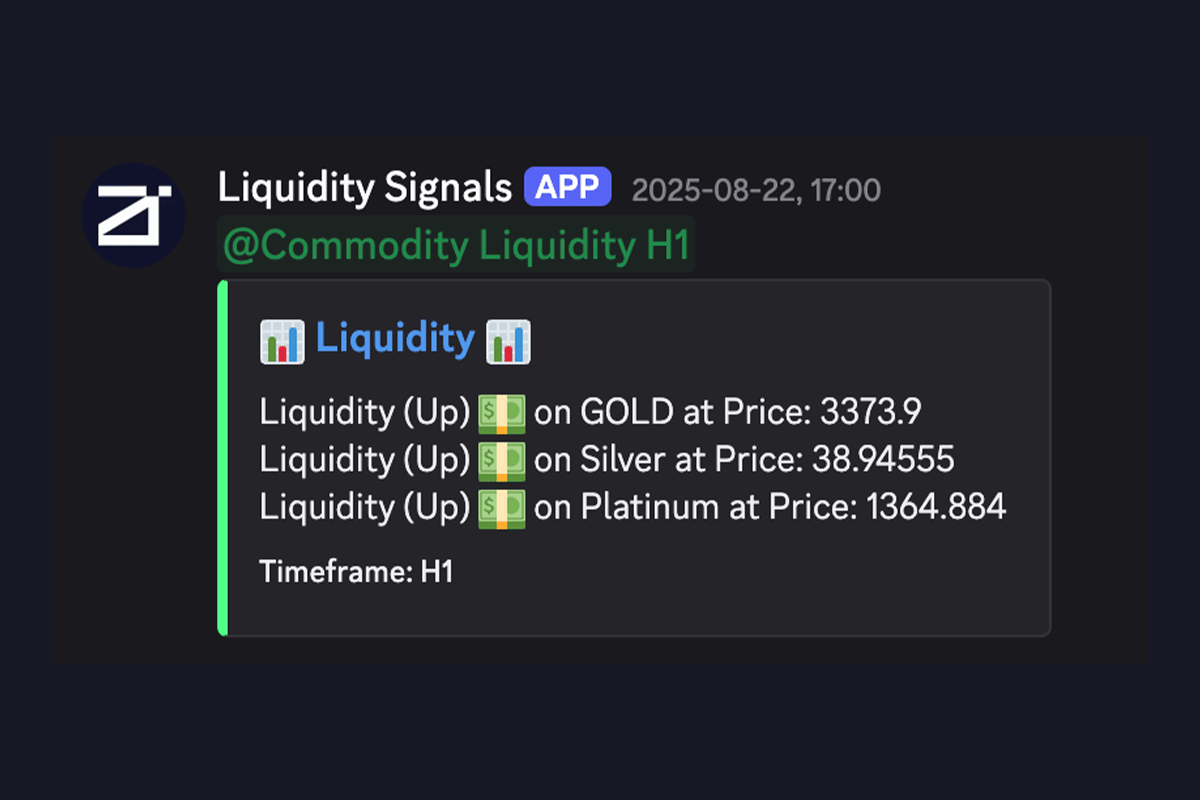
Once those conditions are met, the opportunity becomes a signal. In a manual service, an analyst may publish it themselves. In an automated system, software can generate the alert immediately and deliver it through an app, Discord, Telegram, email, or another platform. That delivery is where the trader enters the process because receiving a signal doesn’t automatically mean you should place the trade. Price may have moved since the alert was generated, the setup may not fit your own strategy, or the risk may be unsuitable for your account.
This is why I think it helps to separate the signal from the system behind it. The alert you receive is only the final output.
4. How Traders Actually Use Trading Signals
Many traders use signals mainly to cut down on scanning time. Instead of watching dozens of charts manually, you let the signal system surface markets worth looking at, then check the setup yourself before deciding whether to act.
Others use signals as a second opinion. They may already have a market bias or setup in mind and use an external signal to confirm that similar conditions are being detected elsewhere. Signals can also help traders monitor more markets than they could realistically follow on their own. A trader may normally focus on only a few instruments, while a scanner can monitor dozens of assets and several timeframes simultaneously.
At the other end of the spectrum, some traders use signals more directly and take trades whenever certain alerts meet their own risk and strategy requirements. Even then, the final decision should still account for whether the entry is still valid, how much risk is appropriate, and whether the trade fits the rest of the portfolio.
📌 Editor’s Note: A trading signal’s real value is often in making opportunity discovery faster and more structured.
Read: How to Use Trading Signals Without Blindly Following Them5. Free vs Paid Trading Signals
The difference between free and paid trading signals is not as simple as one being low quality and the other being better. A free signal can still be detailed, timely, and useful. Likewise, a paid service can still send vague or poorly structured alerts. Price alone tells you very little about the quality of the underlying trading process.
Paid services often provide more of the infrastructure around the signal. That may include wider market coverage, faster delivery, more consistent formatting, automated scanning, stronger filtering, ongoing monitoring, or support.
Free signals, on the other hand, may work perfectly well for traders who mainly want ideas and are comfortable doing the rest of the analysis themselves. The useful question is therefore not: “Are paid signals better?” Instead, ask “What additional work is the paid service actually doing for me?”
If the service saves meaningful time, filters a large number of weak setups, monitors markets you could not realistically watch yourself, or gives you a more complete trade structure, the fee may be justified. If it simply puts the same vague alerts behind a paywall, you may have little reason to subscribe. WE covered this distinction in more detail in our guide to Free vs Paid Trading Signals.
6. How Do You Know Whether a Trading Signal Is Worth Acting On?
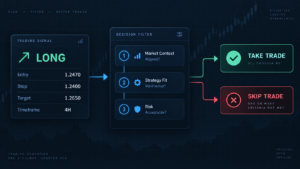
Start with the obvious questions: is the entry still valid, is the stop clearly defined, and does the potential reward still justify the risk? If price has already moved well beyond the intended entry, the original setup may no longer offer the same trade.
Then check whether it fits your own process. A signal may be perfectly reasonable but still unsuitable for your timeframe, risk tolerance, or existing exposure. If you already hold several correlated positions, another signal in the same direction may add more risk than it first appears.
I would also look at whether the market conditions that created the setup are still present. A breakout signal can lose relevance if price has fallen back into the range. A momentum setup can weaken if volatility collapses. An alert is only useful as long as the logic behind it still holds.
A useful decision usually comes down to a few checks:
- Is the setup still valid?
- Is the risk acceptable?
- Does it fit my strategy?
- And do I understand where the idea becomes wrong?
If any of those answers is unclear, there is nothing wrong with skipping the trade.

Zeiierman
With over 16 years in the market, Zeiierman has extensive experience as a full-time trader and risk advisory consultant for hedge funds. He has developed many profitable trading strategies, drawing on his background in risk management and strategy execution.
More from Zeiierman