Trading signal services are easy to compare using the wrong criteria. Most providers will show you some combination of win rates, screenshots, successful trades, proprietary technology, community size, or premium features.
A signal provider can look polished and still offer vague trade ideas with poor risk information. Before subscribing, I would look at three things: what the signal actually contains, how the provider generates it, and how honestly they present the results. After that, you can judge whether the service fits the markets, timeframes, frequency, and level of support you actually need.
The goal is not to find a provider that claims to be perfect. It is to find one whose process is clear enough to evaluate and whose service fits the way you trade.
1. Don’t Judge a Signal Provider by Win Rate Alone
Win rate is probably the first number most traders look at, and it is also one of the easiest numbers to misunderstand. A provider can advertise an 80% win rate and still have a poor overall result if the losing trades are much larger than the winners. For example, eight trades that make +0.5R each and two trades that lose -3R each still produce an 80% win rate, but the sample loses money overall.
You also need to know the average winner, average loser, drawdown, sample size, and how the results were recorded. If the provider says it has a 75% win rate, ask whether that figure includes every signal or only completed trades. Were canceled setups removed? Were partial targets counted as wins? Were results recorded in real time or reconstructed later from charts?
The time period matters too. A strong month tells you much less than a longer record that includes different market conditions. None of this means a provider needs to publish every internal metric imaginable. But the more aggressively a provider markets performance, the more context I expect around those claims.
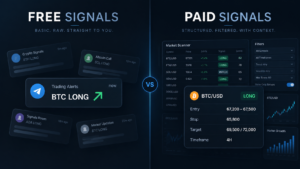
Read: Free vs Paid Trading Signals: What Are You Actually Paying For?2. Look at What the Signal Actually Contains
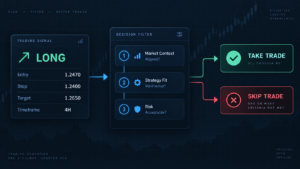
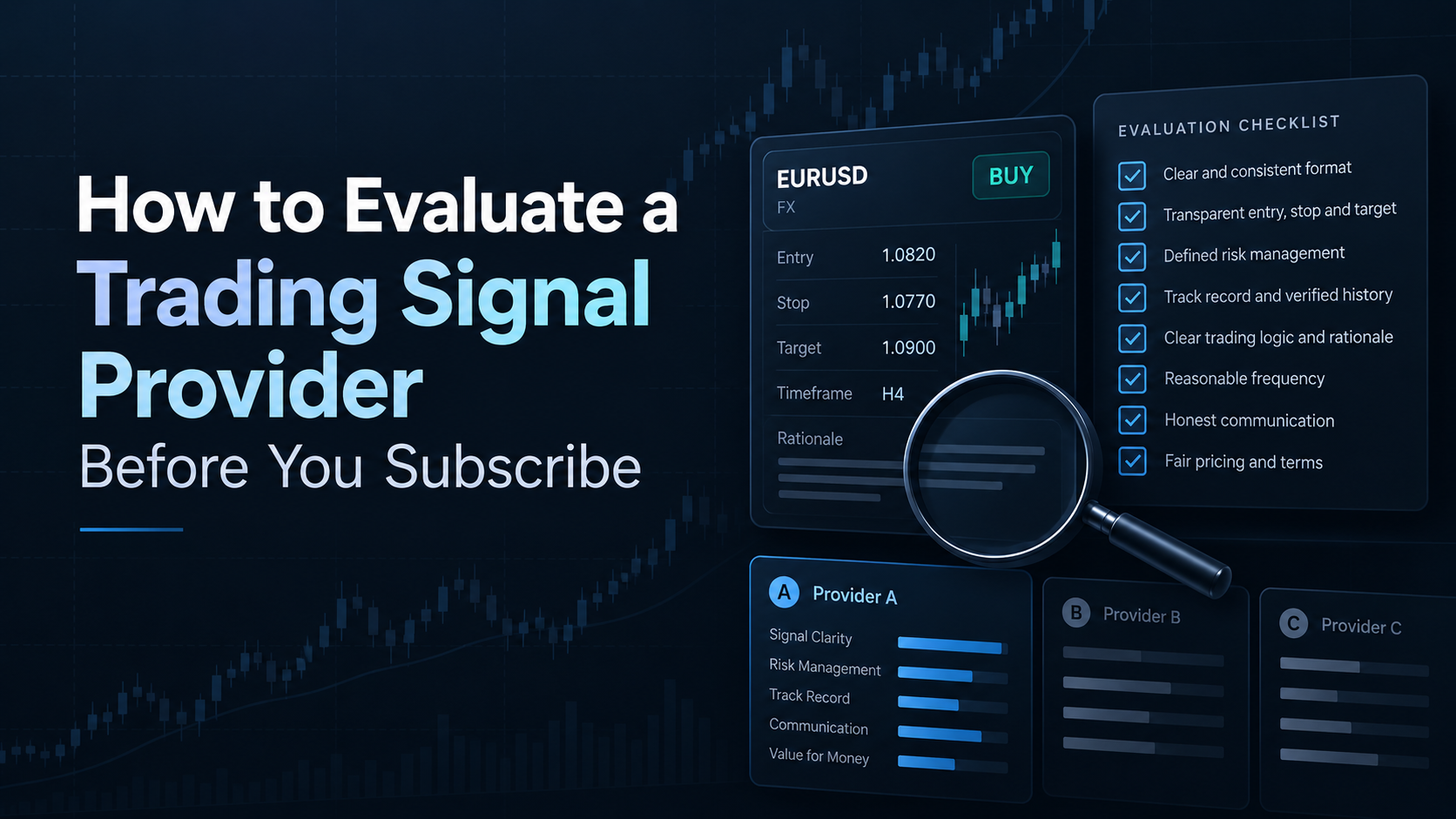
Before worrying about win rates, look at the product you would actually receive. A useful trading signal should usually give you enough information to understand the trade without guessing. At minimum, I would expect to see the market, direction, entry or entry zone, stop-loss, targets, and timeframe. Depending on the setup, an expiry or invalidation condition can be equally important.
I would also look for consistency in how signals are presented. If some alerts include stops and targets while others do not, or if the format changes constantly, that makes it harder to build a repeatable process around the service. The question is simple: does the signal give you enough information to make your own decision, or does it leave most of the trade undefined?
3. Understand How the Signals Are Generated
You don’t need a provider to reveal its proprietary formula, but you should have a reasonable idea of how it produces signals. Some services rely on analysts manually reviewing charts. Others use technical indicators, rule-based scanners, algorithms, AI-assisted systems, or a combination of several methods. None of these approaches is automatically better than the others.
What matters is whether the alerts follow a repeatable process.
For example, an automated system might scan multiple markets and timeframes, apply a set of technical conditions, and send a signal only when they all align. A discretionary service may instead rely on an experienced trader reviewing market structure, momentum, liquidity, or other contextual factors before publishing an idea. Both can be useful, but they are different products.
I would therefore want to understand what happens between market data and the alert I eventually receive. Is every indicator crossover sent automatically? Are weak setups filtered out? Does an analyst review the signal before it goes live? Are multiple timeframes considered, or is the decision based on one chart?
A clear process doesn’t guarantee profitable signals, but it gives you something far more useful than marketing language.
4. Check Whether the Provider Shows the Bad Trades Too
A signal provider is much easier to evaluate when you can see what happens after the trade goes wrong. Winning screenshots show what a service can do, but they aren’t enough to judge consistency. I would also want to see stopped-out trades, expired setups, signals that never triggered, and cases where the trade had to be canceled or managed differently.
That matters because performance can look dramatically better when only successful trades remain visible. A more useful record keeps the original signal visible after the outcome is known. You should be able to compare the entry, stop, targets, and timing with what actually happened instead of relying only on retrospective screenshots.
I would also pay attention to how the provider handles ambiguous results. If a trade hits one target and later reaches the stop, is that counted as a win, a partial win, or something else? If a setup expires before entry, does it disappear from the record or remain documented?
5. Check the Sample Size and Time Period
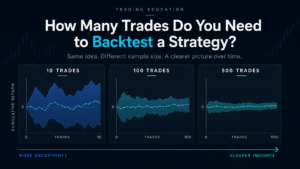
Even a transparent performance record can be misleading if the sample is too small or too narrow. A provider that has performed well across 20 signals may genuinely be doing something right, but that is still very little evidence compared with a longer record. A short run of favorable market conditions can make almost any strategy look stronger than it really is.
So I would check two things together: how many signals are included and what market period they came from.
A hundred signals collected during one strong trend may tell you less than a smaller sample spread across very different conditions. Trend-following signals, for example, can look excellent during sustained directional markets and struggle badly when price becomes choppy or range-bound.
Read: How to Use Trading Signals Without Blindly Following Them6. Make Sure the Service Fits How You Actually Trade
Before subscribing, check whether the markets, timeframes, frequency, and holding periods actually fit your routine. A service focused on five-minute forex scalps may be excellent at what it does, but it won’t help much if you can only check the market a few times per day.
Signal frequency matters for the same reason. Ten alerts every day may sound attractive on a sales page, but if you only want to take two or three trades per week, most of that volume becomes noise rather than value.
I would also look at how quickly you need to react. Some setups remain actionable for hours. Others can become stale within minutes. If the service regularly requires immediate execution while you are at work, asleep, or away from the screen, the problem isn’t necessarily the provider; the service simply doesn’t fit your schedule.
This is why I would evaluate fit before getting too impressed by performance statistics.
7. Look at Delivery, Updates, and Support
Before subscribing, I would check where the signals are sent, how quickly they arrive, and what happens after the initial alert. Some providers use Discord or Telegram, while others rely on apps, dashboards, email, or a combination of channels. The delivery method matters less than whether it is consistent and practical for how you trade.
Updates matter as much as the first notification. If a setup expires, gets invalidated, reaches a target, or needs to be canceled, you should know how the provider will communicate that. Otherwise, you may be left managing an old signal long after the original idea has changed.
It is also worth checking whether previous signals remain accessible. A searchable history makes it easier to review how the service actually performs instead of relying on screenshots or promotional summaries.
A polished interface is nice to have, but it should not distract from the important part: the signal needs to reach you clearly, on time, and with enough follow-up to remain usable.
8. A Simple Checklist Before You Subscribe
Before joining any trading signal service, I would run through a few basic questions.
Signal quality: Does each signal clearly define the market, direction, entry, stop, target, and timeframe? Can I understand where the trade becomes invalid?
Performance: Can I see losing trades as well as winners? Is the record based on a meaningful sample, and does the provider show more than a headline win rate?
Methodology: Do I understand, at least broadly, how the signals are generated and filtered? Is there a repeatable process behind them?
Fit: Do the markets, timeframes, frequency, and holding periods match how I actually trade? Can I realistically act on the signals when they arrive?
Service quality: Is delivery consistent? Are expired or invalidated signals updated? Can I review previous alerts? Are pricing, billing, and cancellation terms clear?
You do not need perfection in every category, but you should understand what you are compromising on before you subscribe.

SM_Trader
SM_Trader is a highly experienced coder and strategy developer who brings the most complex algorithms to life. As a member of MENSA, the prestigious organization for individuals with intelligence scores in the top 2% of the world, he combines exceptional analytical skills with a keen eye for numbers and statistics, empowering businesses to grow at the right pace and in the right direction.
More from SM_Trader