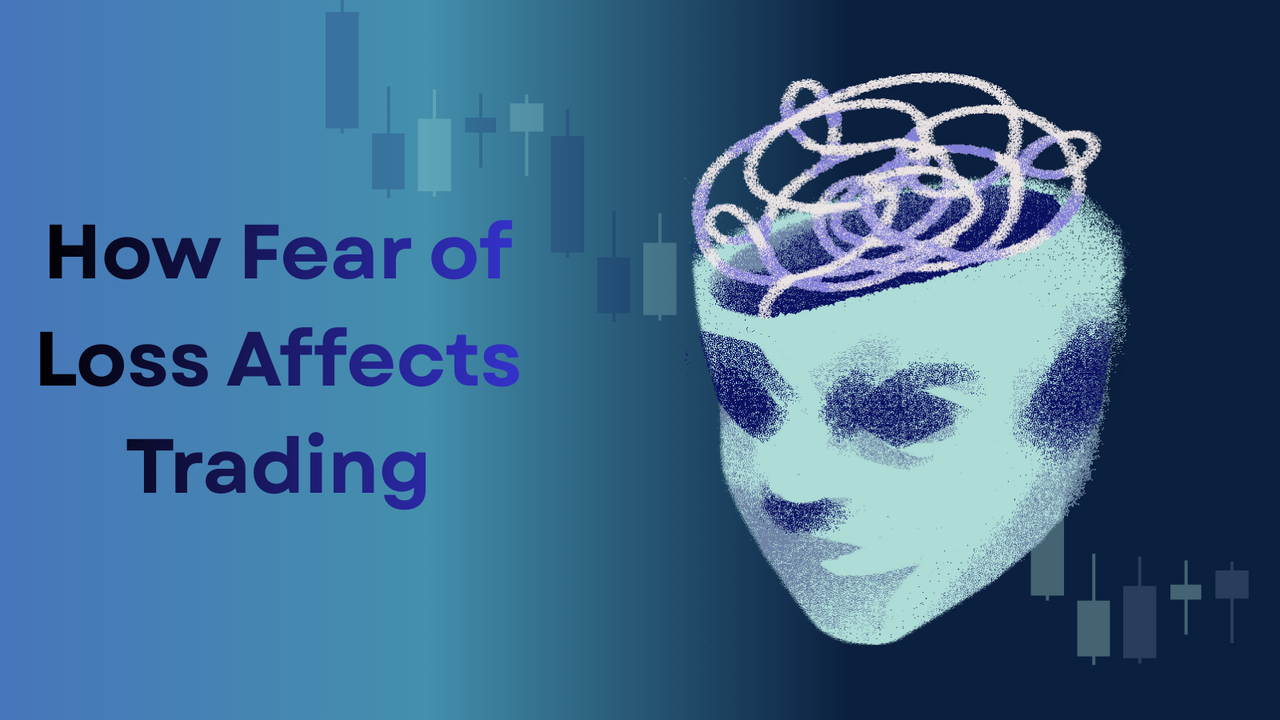
I am sure you have been there already. Built a solid setup, worked on it for hours on end, but hesitated to make the final call when the prime came where you intended. It’s classic loss aversion, and it works like clockwork.
Sometimes you may be waiting for “a little more confirmation,” and other times you may close a good position in fear of losses, leading to opportunity costs. Fear of losing money does not always manifest as panic or impulsive trading. It usually hides behind hesitation, overthinking, or overly cautious decisions that quietly eat into your performance. Over time, this fear does more damage to trading accounts than bad strategies ever will.
This article is not about motivation or positive thinking. It’s about understanding where the fear of loss comes from, how it shapes your decisions on the chart, and what you can realistically do to reduce its influence without pretending that risk will ever disappear. Fear never fully leaves trading, but it does not have to control you.
What is this fear exactly?
Fear of loss in trading is deeply tied to a concept called loss aversion, a well-documented behavioral bias in psychology and finance. Put simply, human beings feel the pain of losing money more intensely than the pleasure of making the same amount.
Think about it. If you find $100 on the sidewalk, you’ll be happy for an hour. But if you lose $100 out of your wallet, you’ll be thinking about it for like three days. You’ll be mad at yourself. You’ll retrace your steps while feeling robbed. The emotional imbalance is real, measurable, and hardwired. In trading, where gains and losses are frequent and visible, this bias becomes especially powerful.
What makes this dangerous is that traders often assume fear shows up only when things go badly. In reality, fear influences decisions even when the strategy is solid and the market conditions are favorable. It affects when you enter, when you exit, and how you size your trades.
Fear of loss does not mean you lack confidence. It means your brain is doing what it evolved to do: protect you from perceived danger.
We also suffer from the Endowment Effect. This is the psychological quirk where people value something they own more highly than they would if they didn’t own it, leading them to demand more to sell it than they’d pay to buy it, often driven by loss aversion.
Where Fear of Loss Comes From in Trading
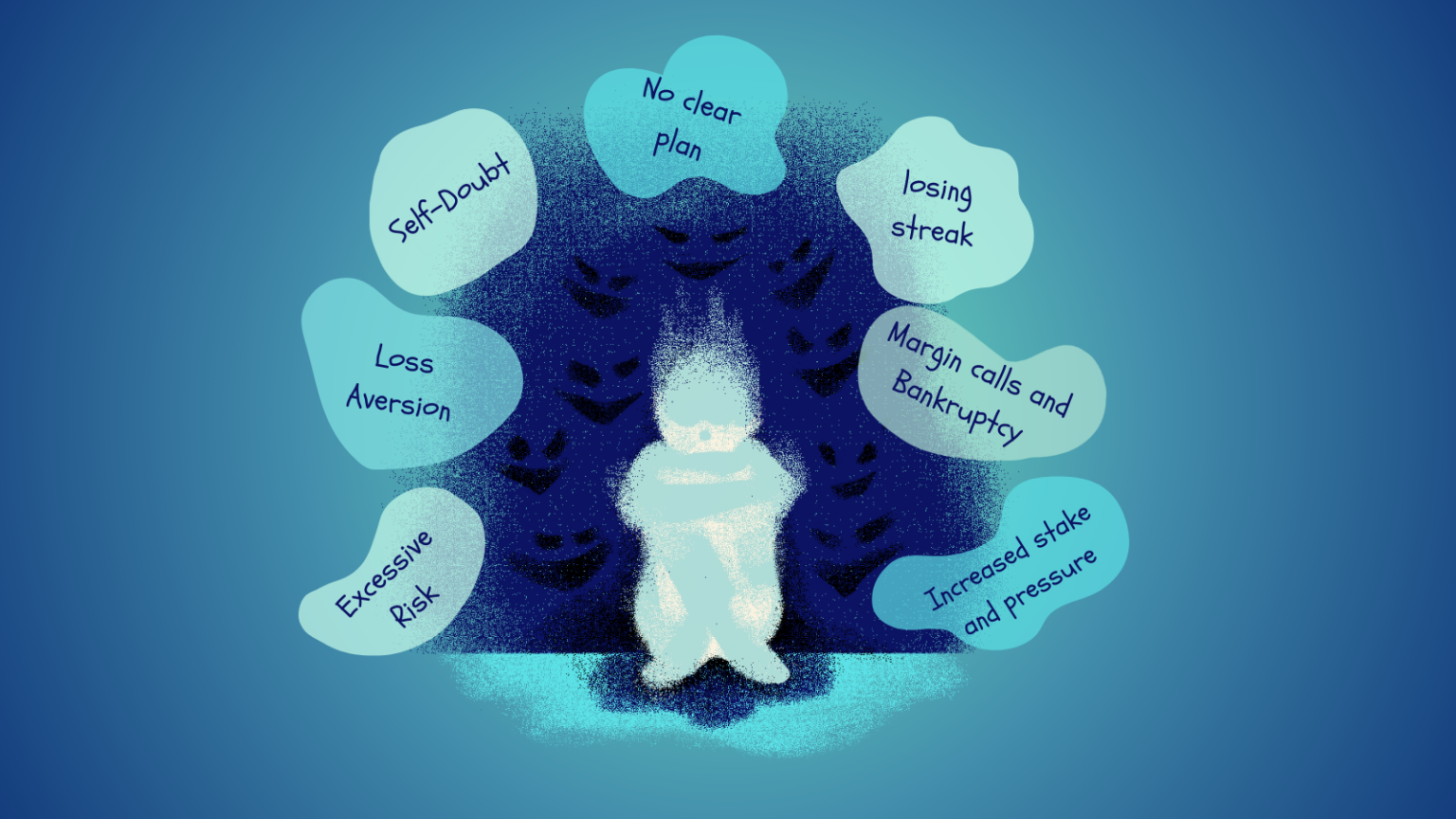
1. Impact of Past Losses
A big loss can really affect our mindset for a long time, sometimes months or even years. Things like a big drawdown, a margin call, or a day when emotions get the best of you can leave a mark. Our minds tend to record these instances as warning tales.
So, when a new trading opportunity looks a bit like a past losing position, that fear kicks in automatically. The trader might hesitate, have doubts, or even completely avoid the trade, no matter how different the market context really is. This response is subconscious and difficult to override through logic alone.
The market? It doesn’t hold on to your past failures, but your mind definitely does.
2. Risking Money That Carries Emotional Weight
When a trader risks money they can’t afford to lose, fear can really take over. It’s not just about the potential for financial loss; it’s also about money that carries emotional weight, like savings set aside for family needs, education, or basic living costs.
When losses start to threaten their personal stability, every trade becomes a heavy emotional experience. The trader loses sight of the probabilities and instead becomes fixated on survival. In that moment, making rational decisions goes out the window real quick.
A lot of people think of position sizing as just a technical skill, but it’s actually one of the key tools for managing emotions in trading.
3. External Pressure and Unrealistic Comparisons
Today’s trading culture amplifies fear, mostly because of all the comparisons we see everywhere. Social media is packed with screenshots of profits, stories of rapid account growth, and some pretty wild claims about success.
This creates a tough atmosphere with expectations that are just too high. Traders start worrying not just about losing cash, but also about lagging behind, missing opportunities (FOMO), or not meeting a standard they’ve set in their minds. That pressure to do well just keeps building, and so does the fear of losing out.
4. Increasing Stakes Increase Emotional Pressure
As account balances grow, each trade carries more emotional weight. A loss that didn’t seem like a big deal before can suddenly feel like a lot of money. With growth, fear changes too.
Traders who’ve been around the block often find themselves more worried about holding onto their profits than about making more. This mindset can make them play it too safe and miss out on some good chances.
5. The Burden of Consistency
Staying consistent can actually put a lot of pressure on traders. Those who have been successful for a while might worry about losing their streak or giving back their profits. This kind of fear can cause them to hesitate, trade smaller amounts, or over-manage their trades.
Sometimes, a trader who is stepping up the initial ladder of the trading journey can also face a weak day in general life, which can seriously and subconsciously affect consistency. This eventually leads to self-doubt and, ultimately, to fear of making moves that were well-practiced and reliable.
6. Identity and Self-Worth
When traders start to tie their trading success to their self-worth, losing money can hit hard. It’s not just about the cash; it actually feels like a hit to your skills or smarts, rather than just bad luck.
Honestly, one of the toughest things to handle in trading over time is keeping your identity or pride separate from your performance.
How to overcome fear of loss while trading?
Fear cannot be removed from trading, and trying to eliminate it completely is often what makes it worse. The goal here is control, not emotional nothingness.
Professional traders do not trade fearlessly. Get this myth out of your mind immediately. I re-think my trades ALL THE TIME. We trade in a way that limits fear’s authority over decisions. The way you handle the impact of fear requires changes at the structural, behavioral, and psychological levels, not just positive thinking.
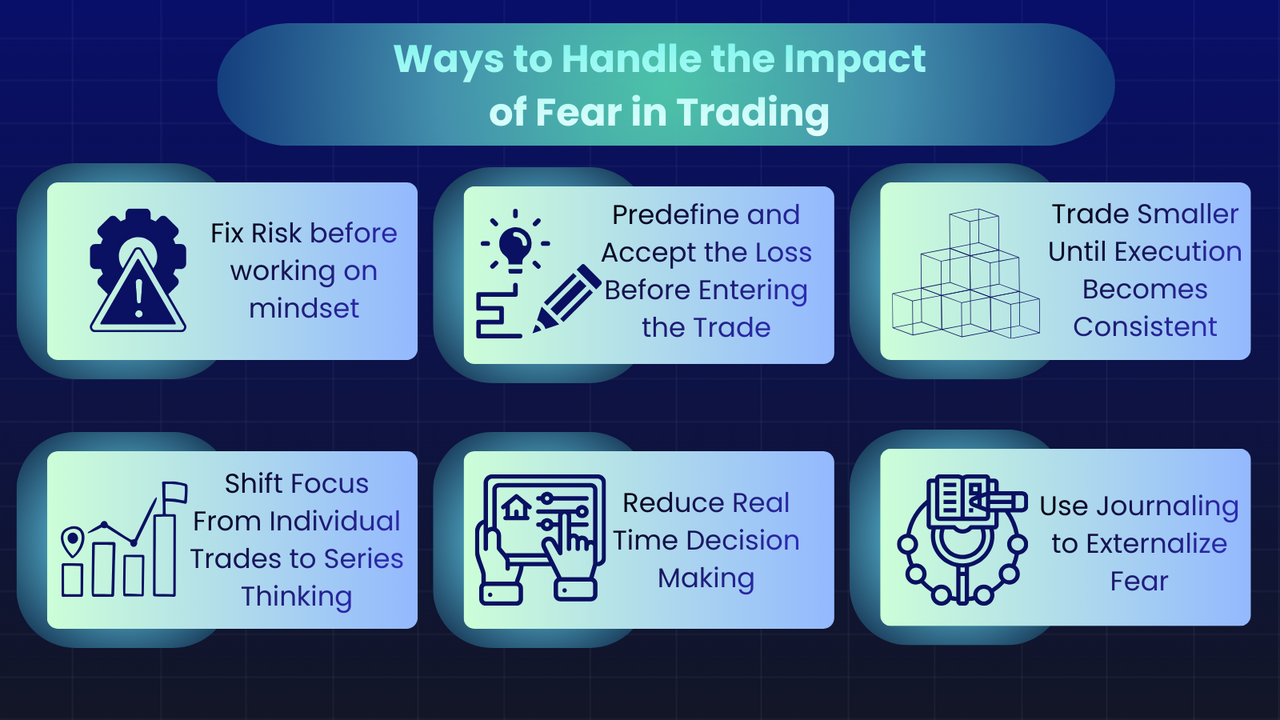
Here are a few ways to reduce how much fear interferes with your trading:
1. Fix Risk Management Before Working on Mindset
One of the biggest mistakes traders make is trying to “think their way out” of fear while ignoring risk structure. Fear is often a very rational response to excessive risk. If the amount you are risking on a single trade feels uncomfortable, your brain is doing its job by raising alarms.
Start by reconsidering your risk per trade. This does not mean choosing an arbitrary percentage because someone online recommended it. It means finding a risk level where a losing trade feels tolerable rather than threatening. Just think about how big a bite you can handle, i.e., your risk appetite in the market. When losses are small and controlled, fear naturally loses intensity.
Position sizing should be treated as emotional regulation, not just math. If you feel tense watching the price move a few candles against you, your size is most likely too large. Reducing size does not mean you lack confidence in your strategy. It means you are creating conditions that enable rational execution.
2. Predefine and Accept the Loss Before Entering the Trade
Fear intensifies when traders mentally resist the possibility of being wrong. Entering a trade without fully accepting the loss creates internal conflict the moment the price moves against you. Before placing a trade, you should consciously know and define:
- Where the trade is invalidated
- How much money will be lost if that level is hit?
- Whether that loss is acceptable without emotional distress
When a loss is mentally pre-paid, the emotional shock is significantly reduced. The stop loss stops feeling like punishment and starts feeling like a normal business expense. Traders who struggle with fear often treat losses as surprises, even when they logically know losses are part of the game.
3. Trade Smaller Until Execution Becomes Consistent
There is no such rule that says you must trade at maximum size to improve. In fact, reducing size is one of the fastest ways to rebuild confidence and consistency. When the size is smaller:
- You hesitate less at entry.
- You are less tempted to interfere with stops.
- You can focus on following the rules rather than protecting money.
Many traders try to grow emotionally while maintaining large position sizes, which usually fails. Skill development happens best when emotional pressure is low enough to allow learning. Think of a reduced size as a training environment.
Once execution becomes consistent, size can be scaled gradually without reintroducing fear.
4. Shift Focus From Individual Trades to Series Thinking
Traders often let fear take hold when they place too much weight on a single trade. It can start to feel like each trade is a judgment on their skills, intelligence, or chances of success.
But pro traders look at things in terms of series instead of just individual results. A single trade is merely one data point in a larger pattern of probabilities. When you start to see it this way, losses become way less emotionally tolling.
One effective way to cultivate this series mindset is to analyze your performance over a set number of trades, such as 20 or 50, rather than focusing on daily results. This approach helps shift your focus away from those short-term emotional highs and lows and toward your long-term expectations.
Fear starts to fade when the result of one trade doesn’t feel like it’s the end of the world.
5. Reduce Real-Time Decision-Making
When traders have to make too many choices during a trade, fear tends to kick in even more. The more options you leave open during the trade, the easier it is for fear to creep in.
You can minimize this by:
- Clearly defining your entry criteria
- Setting your stop losses and targets in advance
- Using checklists before you dive in
- Avoiding any changes based on discretion once the trade is live
Having clear rules makes the execution process more mechanical. While this doesn’t completely eliminate emotions, it does help stop them from swaying your decisions.
The goal is not to remove discretion entirely, but to limit it during moments of emotional vulnerability.
6. Use Journaling to Externalize Fear
When fear stays inside and goes unchecked, it can feel pretty overwhelming. That’s where journaling can help. It helps you turn those emotional reactions into something you can actually see and analyze. Besides writing down the technical aspects, make sure you note:
- How you felt before making the trade
- What was going through your mind during a downturn
- Any strong urges to pull out early or change your stop-loss
- How did you feel after closing the trade
As you keep at it, you’ll start noticing patterns. You’ll get a sense of when fear tends to kick in and how it impacts your decisions. Just being aware of this can help lessen its grip. What you measure becomes way easier to handle.
Journaling also helps in separating feelings from actual facts. Just because a trade felt awful doesn’t mean it wasn’t executed just as you planned.

Zeiierman
With over 16 years in the market, Zeiierman has extensive experience as a full-time trader and risk advisory consultant for hedge funds. He has developed many profitable trading strategies, drawing on his background in risk management and strategy execution.
More from Zeiierman