I am a numbers guy. Always has been, always will be. It’s what got me into trading, and it’s what made me dive deep into trading bots. After years of practice and research, I ended up with the current versions of premium trading bots that you see on Zeiierman Trading.
Automated trading is often described as a magic button that prints money while you sleep, but that is unfortunately not how it works. What it does do is help traders execute a good edge with consistency, speed, and much less hesitation.
That is why successful traders use bots very differently from how beginners may imagine. We (yes, we) do not hand over our accounts and hope for the best. Automation handles the repetitive parts of trading: scanning markets, firing alerts, executing entries, managing exits, and enforcing risk rules.
In this guide, I’ll break down what automated trading actually is, the different types of bots traders use, what bots are genuinely good at, where they fail badly, and how experienced traders utilize them.
Automated Trading Explained
Automated trading is the use of software to execute trades based on predefined rules. That’s it, nothing fancier. These rules can be incredibly simple, like buying when the price closes above a moving average. Or much more layered, like requiring trend alignment, volatility expansion, and risk limits before a single order is placed.
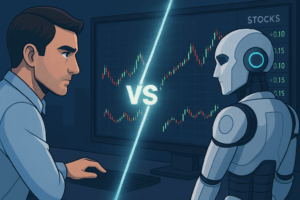
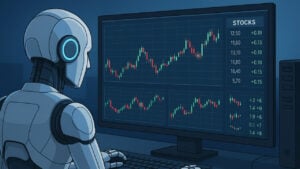
The crucial part to remember is that the bot is not “thinking” for itself. It is not discovering magical opportunities out of nowhere. It is only doing what it has been told to do – just faster, more consistently, and without the emotional baggage. If the logic is bad, the bot will still follow it. It will just lose money with impressive efficiency.
In real-world trading, automation can sit at different points in the workflow. Sometimes it is used only for signal generation, where the system scans charts and sends alerts when conditions line up. Sometimes it is used for execution, where orders are placed automatically the moment the rules are met. And in more advanced setups, it also handles risk management, such as setting stop-losses, trailing exits, position sizing, etc.
That distinction matters because many traders hear “automated trading” and assume it always means a fully hands-off machine running the entire account. In practice, plenty of successful traders use automation in a much more controlled way.
That’s why automation isn’t really a trading style in itself. It is a method of delivering a trading strategy. The real edge still comes from the underlying logic.
What Bots Are Good At
The biggest strength of automated trading is not intelligence. It is discipline.
Bots are excellent at doing the same thing the same way every single time. They do not hesitate when a setup appears, they do not second-guess an entry after three red candles, and they definitely do not close a good trade early because a random tweet made them nervous. If the rules are clear, a bot can apply them consistently.
They are also very good at speed. In live markets, especially during breakouts, momentum bursts, or fast reversals, a few seconds can make the difference between a clean fill and a terrible one. Bots can scan conditions, trigger alerts, and place orders instantly. That matters even more when you are watching multiple markets at once, because no human can realistically monitor twenty charts with the same focus all day.
Another area where bots shine is repetition. A lot of trading is boring. That is the truth. Scanning for the same pattern, checking the same conditions, adjusting the same stop logic, and repeating the same routine day after day is not glamorous. But it is exactly the kind of structured repetition machines handle well. If your edge depends on doing a few simple things properly over and over again, automation can become a serious advantage.
Bots are also useful for enforcing risk rules that traders often break manually. For example, a system can stop trading after a daily drawdown, reduce size after a losing streak, trail stops without emotional interference, or refuse entries outside specific sessions. That is where automation starts becoming more than just a convenience. It becomes protection against your own worst habits.
So if I had to sum it up simply, bots are good at:
- executing clear rules without hesitation
- reacting quickly when conditions are met
- monitoring more markets than a human can comfortably
- handling repetitive tasks without fatigue
- enforcing structure and risk management with discipline
What Bots Are Bad At
Now for the part most people learn too late. Bots are terrible at fixing bad ideas.
If your strategy has no real edge, automation will not save it. It will just apply weak logic more quickly and consistently until your account reflects that. Many beginners think that the moment they automate something, it somehow becomes more professional. It does not. A bad system with automation is still just a bad system.
Bots are also weak when market conditions change in ways the strategy was never built to handle. If volatility spikes unexpectedly, if news completely changes the structure, or if the market shifts from trend to chop, a bot will usually keep doing what it was told unless you specifically built protections for that scenario.
Another major weakness is overfitting. Traders build a strategy, optimize it until the backtest looks beautiful, and then assume they have found a goldmine. In reality, they may have just built a bot that is perfectly adapted to the past and completely unprepared for the future. That is one of the easiest ways to confuse clean code with real edge.
Then there is the issue of real-world execution. Bots do not trade in a vacuum. There is slippage, spread widening, latency, exchange downtime, API failures, partial fills, and all the other glamorous things that never show up in a fantasy backtest. A strategy that looks amazing on paper can fall apart once those frictions surface in real-world conditions.
And perhaps most importantly, bots are bad at judgment. They do not know when the market feels unstable. They do not know when a move is being driven by nonsense. It’s why serious traders still supervise their systems. The bot can handle execution, but the broader responsibility still belongs to the human behind it.
So yes, automation is useful. Very useful. But it has clear limitations:
- it cannot create an edge where none exists
- it cannot adapt intelligently unless adaptation is coded in
- it can be over-optimized into uselessness
- it is vulnerable to live-market frictions
- it has no instinct, only instructions
That last point is the one that matters most. Bots do not trade better because they are smarter. They trade differently because they are more consistent. If the instructions are poor, consistency becomes a liability rather than a strength.
How Successful Traders Actually Leverage Bots
The best traders do not use bots to avoid doing the hard thinking. They use bots to automate the repetitive, mechanical parts of trading that are easy to mess up manually.
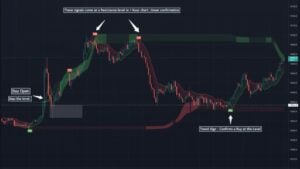
A practical example of that is our Trading Signals workflow. The system scans 80+ markets across 5 timeframes and identifies structured opportunities based on trend, liquidity, and overbought/oversold conditions.
Once a setup is confirmed, the signal is pushed live with a defined entry, stop-loss, take-profit levels, and timeframe. That is where automation becomes powerful. It removes hesitation, monitors far more charts than any person realistically can, and delivers a trade plan the moment conditions align.
But notice what is still not automated: judgment. The trader still decides whether the signal fits the broader market environment, whether the timing makes sense, and how much risk to put on the trade. That is how experienced traders actually use bots. They let automation handle the scanning, structure, and speed, while they stay responsible for execution quality, position sizing, and overall risk. In other words, the bot delivers the opportunity. The trader still owns the decision.
Common Strategies That Are Easy to Automate
Not every trading style is suitable for automation. The strategies that work best with bots are usually the ones built on clear rules, repeatable conditions, and measurable triggers. If a setup relies too heavily on subjective judgment or “gut feel,” it becomes much harder to automate properly.
One good example is the momentum breakout strategy. It’s a natural fit for automation because the rules are often clean. Price consolidates, volatility tightens, volume starts to build, and then price breaks the range with momentum. A bot can be programmed to detect all of that far faster than a person manually scanning charts all day. It can also place the order the moment confirmation appears, which is where speed actually matters.
Read: What Is Breakout Trading? A Practical Guide to Structure, Momentum & VolatilityAnother strategy that adapts well to automation is mean reversion, where the system looks for prices that move too far from a short-term average and bets they will snap back. The logic can be structured around deviations, volatility bands, or overextension from a moving average. Since those conditions are numerical and rule-based, bots handle them well. The catch is that mean reversion breaks down in strong-trend environments – just keep the filters tight, and you’re good to begin.
Then there is the classic trend plus pullback model. It’s one of the most practical systems for automation because it doesn’t require perfect prediction. The bot simply waits for a clear trend, then looks for a controlled pullback into a zone you have already defined, such as an adaptive moving average, prior support, or a value area. If the market structure remains intact and momentum resumes, the trade is triggered. Clean trend logic usually translates well into automation because the invalidation points are also clearer.
You also see automation used in pairs trading or spread-based systems, although that sits a little further up the complexity ladder. These strategies are based on relationships between two assets rather than a single chart. A bot can track the spread, calculate deviations, and execute when the relationship moves too far out of line. It is efficient, but it also requires stronger testing and a much better understanding of how those relationships behave when markets change.
There’s a checklist you can use to determine whether a strategy is ready for automation. Ask yourself the following questions:
- What exactly triggers the entry?
- What invalidates the setup?
- How is risk sized?
- When should the trade exit?
- When should the system stand aside altogether?
If those answers are vague, the strategy is probably not ready for automation yet.
Frequently Asked Questions (FAQs)
Is automated trading actually profitable?
Automated trading can be profitable, but only if the underlying strategy already has a real edge. The bot itself does not create profitability. It simply follows instructions faster, more consistently, and without emotional hesitation.
If the strategy is weak, automation will only make the losses more efficient.
Do trading bots really work?
Trading bots do work, but not in the fantasy way most beginners imagine. They are very good at scanning markets, executing rules, managing entries and exits, and enforcing risk controls. What they are not good at is judgment.
Can beginners use automated trading bots?
Beginners can use trading bots, but they should not rely on them blindly. The smarter way to start is with semi-automated workflows, where the bot helps with scanning, alerts, or structured execution while the trader still supervises decisions.
If you do not understand the bot’s strategy, you should not be putting real money into it. If you’re not ready to start on your own, you can take advantage of our Trading Signals.
What is the difference between automated trading and algorithmic trading?
Automated trading usually refers to systems that place and manage trades automatically according to predefined rules. Algorithmic trading is a broader term that can also include execution logic, order routing, portfolio optimization, and institutional trade management.
In short, all automated trading is algorithmic in some way, but not all algorithmic trading is just about buying and selling signals.
Do I need coding skills to use automated trading?
Not necessarily. Many traders start with platforms, signal systems, or pre-built automation tools that do not require advanced coding. But even if you never write a single line of code, you still need to understand the logic of the strategy, the risks involved, and how the system behaves in live markets.
No-code does not mean no responsibility.
Are trading bots better than manual trading?
If you know what you’re doing, then perhaps yes, they are. Bots are better at speed, repetition, and rule-following. Humans are better at context, judgment, and recognizing when a market no longer fits the strategy.
The strongest results usually come when both sides are used properly: the trader defines the framework, and the bot handles the repetitive execution.

SM_Trader
SM_Trader is a highly experienced coder and strategy developer who brings the most complex algorithms to life. As a member of MENSA, the prestigious organization for individuals with intelligence scores in the top 2% of the world, he combines exceptional analytical skills with a keen eye for numbers and statistics, empowering businesses to grow at the right pace and in the right direction.
More from SM_Trader