With enough experience in the trenches, you get to learn that no individual concept works 100% of the time. For example, a liquidity sweep in a higher frame (on its own) might give you context, but it cannot always tell you where to enter. A Fair Value Gap (FVG) might show an imbalance, but it cannot guarantee that the price will respect it.
That is why we have to continually add relevant factors to a trade strategy to make it a high-probability trade. The smartest traders know that the real edge comes not from a single strategy or habit, but from stacking the odds in your favor, which is also called adding confluences. And that is what I am exploring today…
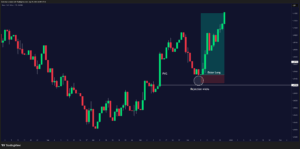
When a liquidity sweep aligns with an FVG, your odds improve because you’re seeing the market through both the lens of liquidity manipulation and imbalances that need rebalancing (Smart Money Concept).
If you already know what liquidity sweeps and FVGs are, skip to the step-by-step guide that I have handcrafted.
The Basic Concepts
1. What is a Liquidity Sweep?
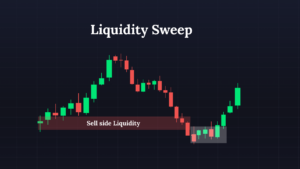
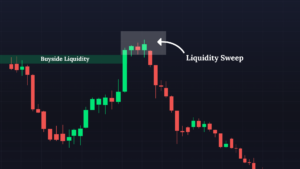
A liquidity sweep occurs when price targets a bunch of stop-loss orders sitting above or below a key level. Market makers and large players intentionally push prices into these areas to trigger stops, collect liquidity, and then reverse the move back to the original path.
For example, if many traders are shorting, with stops, above a recent swing high, the price will often spike above that high, trigger those stops, and then drop back down after collecting enough liquidity. Sweeps are vital because they show where liquidity was collected and where the real move might start.
Read: Liquidity Sweeps in Trading: How to Identify, Confirm, and Execute like a Smart Money TraderThe best part? With the right knowledge, practice, and tools, you can position yourself on the right side of the market once the sweep is complete instead of getting trapped like most retail traders.
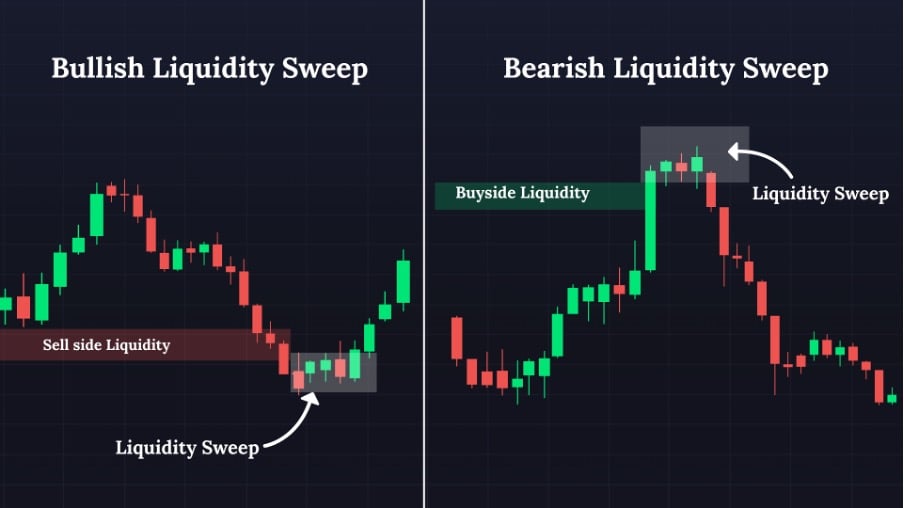
For a more detailed explanation of Liquidity Sweeps and how to trade them, check out our detailed guide.
2. What is a Fair Value Gap (FVG)?
A Fair Value Gap is an imbalance in price action that occurs when one side of the market (buyers or sellers) overpowers the other, leaving a gap between candles. It shows where the market was inefficient and often acts like a magnet, drawing the price back to fill the gap before continuing the initial, aggressive move.
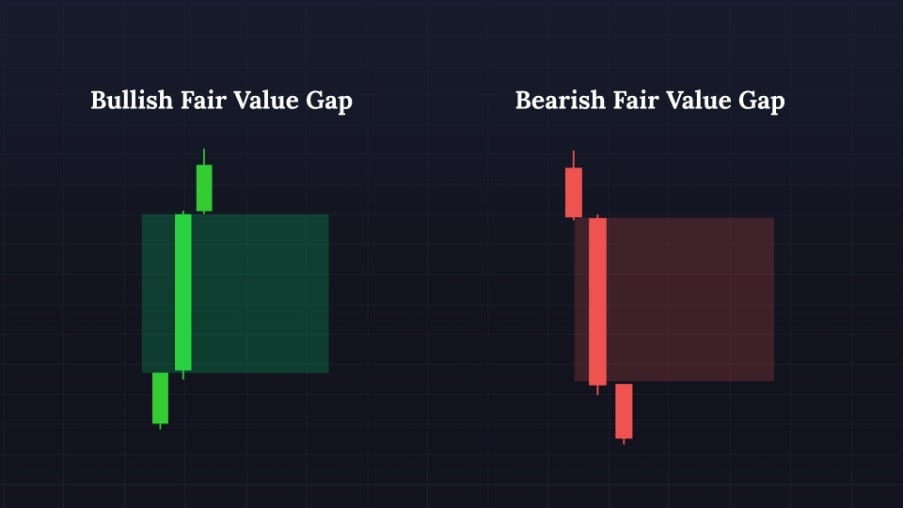
Most traders use FVGs as potential support or resistance levels and as a signal for future price retracements and trading opportunities. You can learn about FVGs and how to trade them (in detail) through this article.
Strategy to Trade Liquidity Sweeps with FVGs
1. Scan timeframes
Higher timeframe will be for context & direction. Scan the 4H or the daily chart to mark major structure, trend, and large liquidity pools. Medium timeframe will be the trade zone. Use 1H or 2H to locate precise liquidity clusters and confirm sweep patterns.
Finally, the lower-timeframe chart is used to execute the trade idea cleanly. Use 15m or 5m to time entries, confirm rejections, and manage stops.
2. Mark liquidity pools
On your higher or medium time frame, draw horizontal zones around equal highs/lows, swing extremes, round numbers, and session highs/lows. Your priority should be the equal highs/lows and recent multi-touch swing extremes at the zone.
📌 Pro Tip: You can use the Liquidity Levels/Zones indicator to automatically identify and mark key liquidity zones.
3. Look out for the sweep
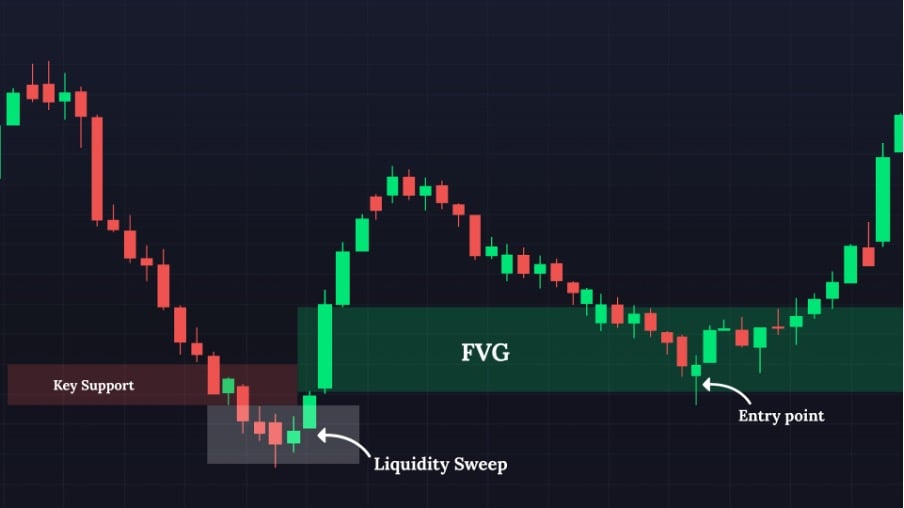
Scan for the price to poke beyond the liquidity pool to trigger stops. Look for a wick that clearly violates the level. Also, look for the displacement follow-through candle in the opposite direction with a significant size and good momentum. Confirm the volume or candle size by looking for a sweep wick and a large rejection candle, which are stronger signals of a valid sweep.
Read: Liquidity Sweeps vs Stop Hunts: Key Differences Explained4. Identify the nearby FVG and wait for a retrace
After the sweep, locate the Fair Value Gap made by the displacement. It can be seen as the price gap or imbalance between two or three aggressive candles (open/close tails leaving unfilled space).
Use the Multitimeframe Fair Value Gap indicator to identify these imbalances and mark the FVG zone. IF you see multiple FVG, prioritize the one that’s closest to sweep and in the path of the retrace.
Wait for the price to retrace from the displacement back towards the FVG zone. Look for the price to enter the FVG, pause, and then show signs of rejection (a small wick or a small structure change on LTF).
5. Entry with Confirmation
What separates a quality entry from a trap is confirmation. On a lower timeframe, such as 5-minute or 15-minute charts, look for the price to react within the gap.
In a bullish bias, look for a bullish engulfing candle that closes firmly higher, a pin bar with a long lower wick that rejects the bottom of the gap, or even a small break of structure where the market takes out a short-term high. These signs will tell you that buyers are stepping back in at the exact zone you marked.
Entry: You can place a limit order at the midpoint of the FVG, which is logical given the gap’s size. You can also make smarter entries: 50% at the midpoint, and the other 50% if the price retests the sweep extreme.
Risks of Over-Stacking Confluence
1. Conflicting Signals
Sometimes multiple confluences don’t align perfectly. For example, a liquidity sweep may look bullish, but the FVG is in the opposite direction, or a higher timeframe imbalance points against your bias. Over-stacking leads to confusion and indecision instead of clarity.
2. Over-Optimizing for Backtests
Stacking many confluences often looks great on historical charts. But in live trading, markets are messy, and rarely do all conditions line up perfectly. Over-optimization can give you false confidence in a system that doesn’t play out cleanly in real time.
3. Ignoring Market Context
Liquidity sweeps and FVGs work best in a clear trend or structured market. So, focusing only on technical confluences without considering fundamentals (news, session timing, macro levels) can cause disaster for your wallet. For example, an FVG setup right before FOMC is highly risky.
4. Overtrading from Forced Confluences
When you train yourself to look for 5–7 confluences, you may force setups that aren’t really there. Traders often start bending rules to see sweeps or gaps that aren’t valid, leading to low-quality trades and an ultimate loss.
5. False Sense of Certainty
The more confluences you stack, the more “certain” the trade may feel. This can lead you to over-leverage or take oversized positions because you believe the setup cannot fail. In my experience, no setup is 100% even sweeps with FVGs can fail if broader market conditions shift.
Liquidity sweeps and FVGs together can build a strong edge for your trading, but remember that no setup is bulletproof. The key is not to overcomplicate things by stacking too many confluences but to take every factor logically into your analysis. With patience and proper risk management, this approach can help you from being trapped by sweeps to trade alongside the smart money and make good money.

SM_Trader
SM_Trader is a highly experienced coder and strategy developer who brings the most complex algorithms to life. As a member of MENSA, the prestigious organization for individuals with intelligence scores in the top 2% of the world, he combines exceptional analytical skills with a keen eye for numbers and statistics, empowering businesses to grow at the right pace and in the right direction.
More from SM_Trader